
The best Track-POD alternatives for your business
Track-POD is a capable delivery management platform. It has route planning, proof of delivery, live tracking, and customer notifications. For businesses that need all of that in one place, it works reasonably well. But it is not the right tool for everyone. The interface can be overwhelming. Other users run into trouble editing routes once a driver has already started. Pricing can feel steep for smaller operations, and the learning curve catches a lot of teams off guard. If you have been looking at the best Track-POD alternatives for your business, this guide will save you time. We have reviewed six options across different business sizes, budgets, and operational needs. Each one is worth considering depending on what matters most to your team.
Why Look for Track-POD Alternatives
Before jumping into the alternatives, it helps to understand what tends to push businesses away from Track-POD in the first place. We went through dozens of reviews users wrote about Track-POD, and here’s what popped out the most.
The interface feels complex. Multiple users across review platforms describe the dashboard as very cluttered and data-heavy. For dispatchers managing fast-moving operations, that visual noise adds up. Sometimes it’s not very straightforward to see the data you need at a glance, and it takes a long time to learn where to look.
Live route editing is limited. Once a driver starts a route, making changes is not straightforward. Track-POD does not allow stop-level edits mid-route. You either override the whole route or work around the limitation manually.
The learning curve affects driver adoption. Getting dispatchers trained is one big challenge. But getting drivers comfortable with the app is another. Drivers’ resistance is high, and they tend to rely on experience rather than an app, which makes their lives harder, not easier. Teams with high driver turnover feel this particularly sharply.
Pricing can scale uncomfortably. Depending on the plan and delivery volume, costs can rise faster than expected as the business grows.
None of these is a deal-breaker for every business. But they are common enough that many teams start looking for alternatives that fit their workflow better, simpler, and make their operations leaner and more efficient.

The 6 Best Track-POD Alternatives
Logistia Route Planner
If your team wants to get up and running quickly without a lengthy setup process, Logistia Route Planner should stand at the top of your list.
Most delivery management platforms require significant configuration before they start delivering value. Logistia takes the opposite approach. Import your orders, generate optimized routes, and start tracking drivers, all without needing to spend days configuring the system first.
What makes it stand out
Logistia Route Planner is built around the idea that route planning should not require a dedicated administrator to manage. Every action should be simple and flexible. The platform must adapt to the business, not the other way around. Dispatchers can set delivery time windows, assign routes to drivers, and make real-time adjustments without needing to rebuild routes from scratch. The driver app is straightforward, which means less onboarding time and fewer support calls from the road.
For businesses that have tried more complex platforms and found the overhead too high, Logistia Route Planner offers a noticeably lighter experience without sacrificing the core features that daily delivery operations depend on.
Best for
Small to mid-size businesses that want reliable route optimization, real-time tracking, and proof of delivery without the complexity required by a large, ultra-customized enterprise software.
Consider it if
You have been frustrated by onboarding time, interface complexity, or support limitations with your current tool.
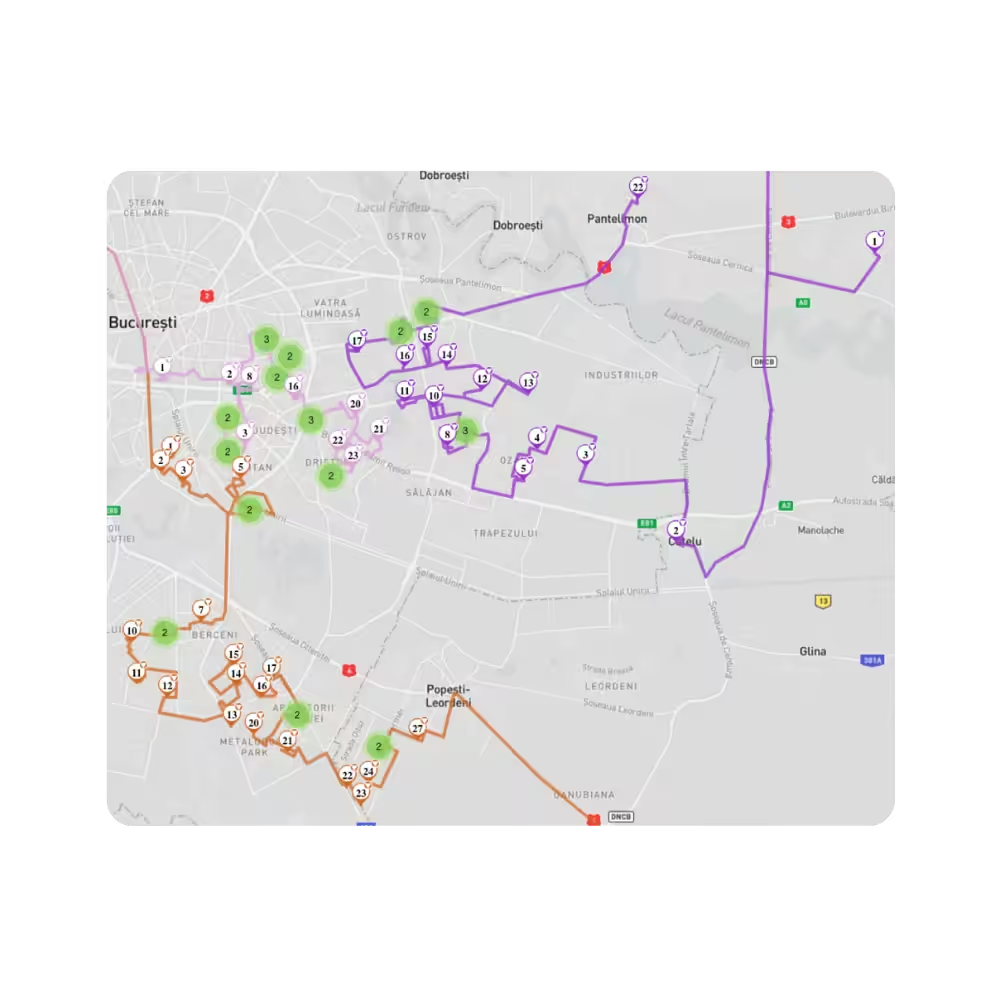
Circuit
Circuit (now rebranded as Spoke in some markets) is often described as one of the easier delivery route planning tools to get started with. Many solo drivers and small teams use it daily because of its simple interface and low learning curve. The dispatcher dashboard is clean and relatively easy to navigate. Routes can be created quickly, and basic adjustments like adding or removing stops can be done without much effort.
That said, the simplicity comes with trade-offs. Several users mention that once operations become more complex, the platform starts to feel limiting. Handling more advanced routing scenarios, custom constraints, or larger delivery volumes is not always as smooth as expected.
What makes it stand out
Circuit focuses on keeping things simple. For small teams or solo drivers, this can be helpful in the beginning, especially if they want to avoid a steep learning curve. However, users who scale their operations often run into limitations. Features like advanced optimization logic, deeper reporting, or workflow customization are not as developed compared to more robust platforms. Some feedback also points to the tool being better suited for straightforward use cases rather than more dynamic or complex delivery environments.
Pricing is another factor that comes up frequently. The stop-based model can seem reasonable at first, but as delivery volumes grow, costs can increase faster than expected.
Best for
Solo drivers and small teams that need a simple tool to plan basic delivery routes without much setup.
Limitations
Fewer advanced constraints and analytics. Pricing can increase noticeably at higher stop volumes.
Routific
Routific is a well-established route optimization platform focused on helping businesses build efficient routes and reduce fuel consumption. It is a cloud-based solution used by companies managing multiple drivers and relatively structured daily delivery schedules. The platform supports key features like delivery time windows, driver shift limits, and real-time tracking. Its map-based interface gives dispatchers a visual overview of routes, which can make it easier to understand how deliveries are distributed before sending drivers out.
In practice, many users find that Routific performs well once routes are set up correctly. However, some also mention that getting to that point can take time, especially for teams that are new to route optimization software.
What makes it stand out
Routific is often recognized for the quality of its route optimization. Users frequently report reductions in total miles driven and improvements in on-time delivery rates compared to manual planning. For businesses that are primarily focused on efficiency and predictable routes, this can translate into measurable savings over time.
That said, feedback across review platforms suggests that the experience is not always as smooth for every use case. Some users point out that while the optimization engine is strong, the platform can feel less flexible when dealing with more dynamic or fast-changing delivery environments. Adjusting routes during the day is possible, but not always as intuitive or quick as expected.
Another common point mentioned is the learning curve. While the interface is visual, it still requires time to fully understand how to configure routes, constraints, and schedules effectively. For smaller teams or those looking for a quick setup, this can slow down adoption.
Pricing is also something users bring up. As the number of drivers or routes increases, costs can add up, which becomes an important factor for growing businesses.
Best for
Mid-size operations that prioritize route efficiency, fuel savings, and have relatively stable, predictable delivery schedules.
Limitations
Less suited for highly dynamic operations where routes need frequent real-time changes. The platform can take time to learn, and some users find it less flexible when handling complex or rapidly changing scenarios. Pricing may also become a consideration as the operation scales.
Onfleet
Onfleet is built for businesses running high-volume last-mile delivery operations. It is a more enterprise-oriented platform than most on this list, with a strong API, deep analytics, and features designed for teams managing a large number of drivers and deliveries daily.
The dashboard gives dispatchers comprehensive visibility across the entire operation. Drivers receive tasks through a well-designed mobile app. Customers get real-time tracking links and notifications automatically.
What makes it stand out
Onfleet is known for offering a broader set of features compared to basic routing tools. It’s often used by businesses that need more than simple route planning, especially those looking to manage last mile deliveries on a larger scale.
One of its stronger points is the API, which allows integration with systems like e-commerce platforms and order management tools. This can be useful for companies that want to connect their delivery operations with existing workflows.
That said, users often mention that this added depth comes with complexity. Setting up and maintaining integrations may require technical resources, and the platform can feel heavier to manage compared to simpler tools. For teams that don’t need advanced customization, this can make daily use more involved than expected.
Best for
Growing and larger businesses with high daily delivery volumes and integration requirements.
Limitations
Pricing is on the higher end. For smaller operations, many of the advanced features may go unused while the cost remains fixed. Setup and configuration take time.
OptimoRoute
OptimoRoute is a route planning software focused on efficiency for businesses with predictable, structured delivery operations. It handles time windows, driver scheduling, capacity constraints, and multi-day route planning.
The platform is capable when routes are planned rather than built dynamically throughout the day. For businesses running fixed or recurring routes, it can help you save time in the planning process.
What makes it stand out
OptimoRoute’s route optimization is generally considered reliable, especially for businesses moving away from manual planning. Routes are usually structured in a logical way, which can help improve organization and reduce inefficiencies.
However, the results can depend on how well the data and constraints are set up. Some users note that it takes time to fine-tune routes to match real-world conditions, and the optimization may not always handle more complex or dynamic scenarios as smoothly as expected. For teams coming from manual planning, there can still be noticeable improvements, but the impact may vary depending on the use case.
Best for
Mid-size to larger businesses with structured delivery schedules and recurring routes.
Limitations
The learning curve is real. New users often say they had to spend considerable time configuring the system before it started working well. Real-time route editing is more limited than some competitors. Pricing increases with each additional driver.
Route4Me
Route4Me is one of the more established names in the route optimization space. It is designed for both delivery and field service operations, which gives it broader applicability than most tools on this list. The platform supports a wide range of route types, including multi-day routes, territory management, and high stop-count planning. It integrates with a large number of third-party tools and has an active marketplace of add-ons.
What makes it stand out
Route4Me is often described as a flexible platform, especially for businesses with non-standard delivery workflows or field service needs. It offers a wide range of features, and the marketplace allows users to add extra functionality depending on their requirements.
However, this flexibility comes with trade-offs. Many users mention that the platform can feel fragmented, with key features locked behind add-ons rather than included in the base plan. As a result, costs can increase quickly as you start enabling the functionality you actually need. Some feedback also points out that configuring the system to match specific workflows is not as straightforward as they hoped and often need assistance, and the overall experience may feel more complex compared to simpler tools.
Best for
Businesses with complex or non-standard routing needs, field service teams, and operations that require extensive integrations.
Limitations
The add-on pricing model means the base cost can grow quickly as you add features. The interface takes time to navigate, and the depth of configuration options can feel overwhelming for smaller teams.
Side-by-side comparison
|
Tool name |
Best for |
Pricing |
Ease of use |
Edit live routes |
|---|---|---|---|---|
|
Logistia Route Planner |
Fast onboarding, efficient routes, daily operations |
Per driver |
Very high |
Yes |
|
Spoke |
Solo drivers, quick adoption |
Per stop |
High |
Yes |
|
Routific |
Efficient routes |
Per vehicle |
Medium |
Limited |
|
Onfleet |
High-volume last-mile delivery |
Per task/month |
Medium |
Yes |
|
OptimoRoute |
Structured, planned routes |
Per driver |
Medium |
Limited |
|
Route4Me |
Complex needs, field service |
Base plan + add-ons |
Medium-low |
Yes |
How to Choose the Right Track-POD Alternative
The best tool for your business depends on a few key factors. Here is a practical way to think through the decision.
Team size and growth trajectory. If you are running a small operation today but expect to grow significantly, factor in how pricing scales. Tools that charge per driver or per stop can become expensive quickly. It might be worth starting with a more complete tool, rather than a basic one, because changing tools often leads to driver resistance and digital fatigue.
Daily workflow. Do your routes change frequently throughout the day, or are they mostly planned in advance? Tools like Logistia and Circuit are built for flexibility. OptimoRoute and Routific perform best when routes are planned ahead.
Consider your drivers. The driver app experience matters as much as the dispatcher dashboard. Tools with simpler driver apps tend to see faster adoption and fewer support issues.
Be realistic about setup time. Some platforms require significant configuration before they deliver value. If your team needs results quickly, prioritize tools with faster onboarding. Logistia Route Planner and Spoke are consistently rated among the easiest to get started with.
Match features to your actual needs. It is easy to get drawn to platforms with impressive feature lists. But paying for depth you will never use is waste. Focus on what your operation genuinely requires every day.
Frequently Asked Questions
What are the main reasons to look for a Track-POD alternative?
The most common reasons include the complex interface, limited live route editing once drivers are on the road, a steep learning curve for new users, and pricing that grows quickly as teams scale. Some businesses also find that Track-POD’s feature depth is more than they need, and they would prefer a simpler tool.
Which Track-POD alternative is easiest to set up?
Logistia Route Planner is consistently rated as the easiest to adopt. Most teams can go from sign-up to active use in the same day, without extended onboarding or configuration work.
Is there a free Track-POD alternative?
Some tools offer limited free plans or trials. Circuit has offered free tiers for low-volume users, less than 10 stops per day. Most full-featured platforms require a paid subscription once you move beyond a handful of drivers or deliveries per day.
Which alternative is best for small delivery businesses?
For small businesses that need core route planning, real-time tracking, and proof of delivery without paying for features they do not need, Logistia Route Planner and Circuit is the strongest option. It is straightforward to use and reasonably priced at smaller team sizes.
Which alternative works best for larger operations?
While Logistia Route Planner can handle larger fleets as well, Onfleet and OptimoRoute can be suited for larger, more complex operations too. They offer deeper features, stronger APIs, and better support for high delivery volumes. The trade-off is a longer setup process and higher pricing.
Can I switch from Track-POD without disrupting daily operations?
Yes, most alternatives offer import tools and onboarding support to make the transition smoother. The key is to test the new platform in parallel with your existing setup before switching fully. Tools with faster onboarding, like Logistia Route Planner, make this easier.
Final Thoughts
Track-POD is a solid platform, but it is not the right fit for every business. If you have been running into issues with interface complexity, limited route editing, driver adoption, or scaling costs, the best Track-POD alternatives on this list are worth a serious look.
For most small to mid-size businesses, the combination of fast onboarding, clean daily workflows, and reliable route optimization makes Logistia Route Planner the most practical starting point. You get the core features your operation depends on without the overhead that slows teams down.
If your needs are more complex, whether that is high delivery volume, deep integrations, or field service requirements, Onfleet, OptimoRoute, and Route4Me each bring genuine strengths to the table. The right tool is the one your team will actually use, consistently, every day. Start there, and the rest follows.